Posts

Showing posts with the label Divine Hiddenness

Why doesn't God reveal Himself clearly so we can all be saved? Is God incompetent?

At the always interesting Thinking Christian blog, Tom Gilson does a quick review of part of a new book by the alarmingly short-sighted John Loftus .  Personally, I don’t like to give the aforementioned Mr. Loftus any recognition on this blog because he is remarkably uninformed about Christian thought even by atheist standards. (For the remainder of this post, I will treat him like Lord Voldemort in Harry Potter by referencing him as “he-who-shall-not-be-named” in this post, I don't do so because I am afraid of him or his arguments, but only because he tends to ensnare poor agnostics in his web of deceit and should not be given a further platform from which to be heard.) But since Gilson raises his new book in the Thinking Christian blogpost, I have little choice but to mention his name at least at the outset. In his post, Gilson responds to an argument advanced by he-who-shall-not-be-named in his latest book (which he uncharacteristically sent as a promotional copy to Gilson – ...
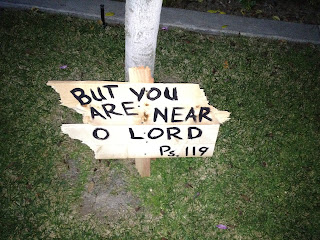
How God Speaks to Us

Image
I was able to make Dr. J.P. Moreland's presentation at a conference that Biola University put on, When God Seems Silent . I missed the beginning of Dr. Moreland's lecture due to traffic, but as an experienced public speaker, Dr. Moreland frequently recapped his points. It may seem counterintuitive to begin a conference on the supposed silence of God by pointing out the ways in which God speaks to us but I thought it fitting.  Dr. Moreland acknowledged that there are times when the believer is not hearing from God and that speakers to follow would address dealing with those periods of silence, but it was his role to point out that God often is communicating with us and we should learn the ways in which He communicates. Too often we can pity ourselves as abandoned by God when we are not listening.  Gifts of prophecy, wisdom, and words of knowledge . 1 Corinthians 14:11.  Dr. Moreland is no cessationist.  God speaks to us Today through words of prophecy, wi...

My own Take on Divine Hiddenness.

I am going to approach the issued raised by Chris Price  (Layman) a couple of weeks ago, Divine Hiddenness, and come at for a perspective very different from his. This is not intended a criticism of Chris's view, I do not necessary disagree with him. I do have a different perspective from the one the takes to the problem. I'm going to began, not by summarizing all three posts by Chris but by quoting for J.D. Walter's summary of the argument in the comment section to the last post: I think you [Mark] misunderstand how the argument from divine hiddenness is supposed to work. It generally goes like this: if the biblical God existed, due to his love he would make his existence more obvious. But he doesn't, therefore he probably does not exist. Notice the 'would' in that argument? How would Schellenberg or any other advocate of the hiddenness argument know to expect God's existence to be more obvious? They are taking for granted the Western classical conc...

Divine Hiddennes as a Mechanism of God's Mercy

This is my third post on the issue of divine hiddenness. The first post laid out the so-called problem of divine hiddenness, flagged some of its limitations as an argument against God's existence, and offered a number of suggested answers to the objections usually associated with divine hiddenness. One of those suggestions was: Or perhaps the "epistemic distance" is in fact a mercy. That the more clear, the closer, is God's presence to humans the closer and swifter his judgment must be. God is, after all, an "all consuming fire." Heb. 12:29. Perhaps God has balanced the level of evidence of His presence with His desire to give more time for the spread of the Gospel before His judgment must come. This post expands on this point. A recurring theme throughout the Old Testament is that human beings cannot stand the full presence of God, at least not in their current condition. In Exodus 3:5-6, God revealed himself to Moses through a burning bush, but even s...

The Nature of Doubt and Divine Hiddenness

In a previous post , I began a discussion about the issue of Divine Hiddenness. A perhaps unwarranted assumption of the argument from divine hiddenness is that more evidence of God's existence would necessarily result in the conversion of all rational unbelievers. While it is possible that more evidence of God’s existence or nature may result in the conversion of more unbelievers, it is by no means certain and it is doubtful that it would lead to the conversion of all rational unbelievers. The assumption that more evidence will result in such conversions rests on the questionable premise that the rejection of God is simply a matter of intellectual rigor rather than of rebellion. Christianity does not accept this assumption nor should it. In Romans 1:18-24, Paul is clear that people who have sufficient knowledge of God continue to sin because they choose to do so. Although “God has made it plain to them” they “have become filled with every kind of wickedness, evil, greed and d...

Is Divine Hiddenness a Problem?

The so-called problem of divine hiddenness has apparently gained currency among skeptics as not only an interesting question, but an affirmative argument for atheism. The argument goes something like this (as Michael Murry describes John Schellenberg's forumlation in Divine Hiddenness and Human Reason ): 1. If there is a God, he is perfectly loving. 2. If a perfectly loving God exists, then no one could be a reasonable atheist. 3. But there are people who are reasonable atheists. 4. Thus, no perfectly loving God exists. 5. Thus, there is no God. There are, of course, variations of the argument and more detailed explanations of each point. You will often hear, for example, Nos. 2 and 3 are phrased in terms of "inculpable disbelief" or "reasonable unbelief," the idea being that there are people who reasonably or justifiably conclude there is no God based on the evidence, or lack of evidence, available to them. The argument does not deny the existence of re...